

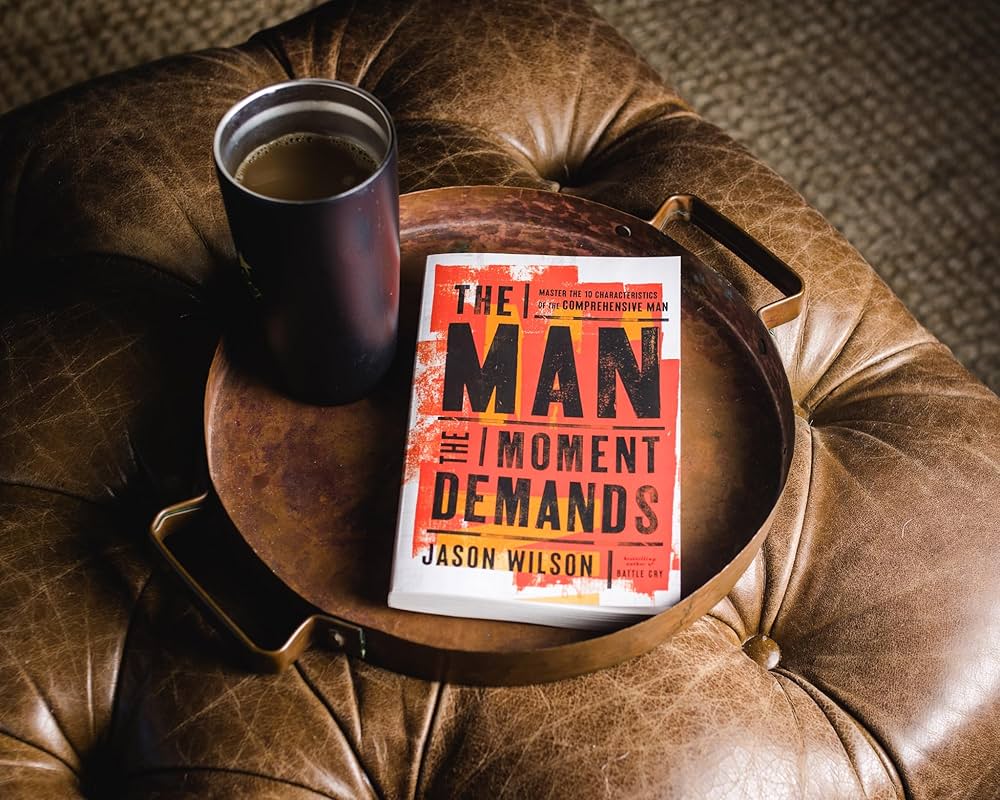
I came across an interview with Mel Robbins and Jason Wilson. He discussed the book I am reviewing here so I decided to get a copy and read through some of the things that he talked about within the interview. I found Jason’s overall story intriguing. Jason is the founder and CEO of Union which is a non profit youth development organization in Detroit, MI. Jason created this martial arts academy with a mission to help young boys in Detroit, MI, overcome negative emotions and grow into successful men. Jason is an expert in emotional stability training and helps to teach fatherless and misguided black boys how to introspectively confront and conquer their emotions.
What was the main message or lesson of this book?
The main message I received from the book The Man the Moment Demands was learning the differences between a masculine man vs. a comprehensive man. Nowadays we hear different dialogue about what it means to be a “man” and there seems to be a difference in opinion. The book discusses the “alpha male” archetype helping to promote more growth over superiority and dominance. The book provides a practical guide that men can follow to help become more emotionally intelligent, self aware and self disciplined. Transparency is a big lesson he discussed in growing into less of a masculine man and more into what he discusses as a comprehensive man.
Some of the differences between the masculine man vs. the comprehensive man are:
- The masculine man suppresses his emotions to hide behind a facade to appear strong while the comprehensive man expresses his emotions freely without fear of being judged (Wilson, 2025).
- The masculine man exudes only masculine characteristics while the comprehensive man exudes both masculine and un-masculine characteristics (Wilson, 2025).
- The masculine man feels threatened when another man is more successful while the comprehensive man is not threatened by another mans success but is inspired by it (Wilson, 2025).
- The masculine male views women as subservient and as sex objects while the comprehensive man respects women and values their superior qualities (Wilson, 2025).
Jason discusses 10 characteristics of how to become a comprehensive man within the book: Fighter, Provider, Leader, Lover, Nurturer, Gentleman, Friend, Husband, Father and the Son. Each characteristic is a chapter within the book going into in depth details about the characteristic. Jason discusses how he has had to transform into each characteristic on his own and what it took for him to get there. Jason’s main goal for each characteristic is for men to overcome stereotypical masculine roles and learn to evolve into a more authentic sense of self.
Jason states that, “As long as your mind remains conformed to the societal constraints of traditional masculinity, you’ll consistently seek escape routes instead of becoming a comprehensive man.” (Wilson, 2025)
Did you find it inspiring and motivating?
I am a black woman so I always find it inspiring for a black individual, especially a black man to write books discussing ways to rid the societal facades of masculinity, learning new ways to express one’s self. Regardless of race a lot of young boys are taught to suppress emotions such as sadness and vulnerability while externalizing emotions such as anger.
Oftentimes in therapy I notice the lack of emotional vocabulary and difficulty expressing how one feels because overall men are taught to perceive emotions as a weakness. Societal norms and some modeled behaviors from authority figures growing up has helped to develop these stereotypes for men.
How do I implement what I’ve learned from this book in my practice?
I find it interesting to read books and find articles that are geared towards the men that I serve within the counseling field. I am not a man so sometimes finding different perspectives to help guide sessions that I have with my male clients can assist in the process of treatment.
The ten characteristics of a comprehensive man are good discussion points for therapy sessions. The book does discuss how hypermasculinity is a facade that hides deep insecurity. This is something that can be reflected on in therapy sessions as well discussing trauma and anger. Many things are intergenerationally based down and discussing the development of this happens within the family dynamics. Therapy can be a safe place for men to express this and process as well.
Jason offers several activities throughout each chapter for reflection time. The activities are pivotal points for a man to sit back and ask himself different things really looking internally to see what improvements can be made. I will share (2) of the activities in the book that I often utilize during therapy.
- Activity 1-The Tree of Trauma. This activity helps to identify the causes of the roots from trauma. This activity reminds me of the Trauma Egg. A trauma egg is a creative, visual tool developed by psychotherapist Marilyn Murray to help individuals process emotional trauma. The exercise involves drawing an egg on paper and filling it with symbols representing significant life experiences, particularly those involving disappointment, betrayal, or abuse. This is something that I do with clients in therapy so that they can understand how traumatic events have helped to shape who they are.
- Activity 2-The Earthquake of Emotions. This activity helps to identify suppressed emotions covered by anger. This activity reminds me of the Anger Iceberg. Jason states, “Men, anger isn’t always the emotion you need to express. It’s just the easiest one to mask fear, loneliness, or shame.” But suppressed emotions don’t disappear they just are hidden until they erupt. The worksheet helps to bring the hidden emotions to the surface and process them appropriately instead of hiding them behind the emotion of anger.
Sticks and stones may break my bones but words will never hurt me, is a mantra that Jason discussed in session mentioning that a lot of us have grown up stating this but not understanding that words can affect us greatly. He mentions that words stick with many of us including men because words can create emotional wounds that later cause anxiety and low self esteem. (Wilson, 2025)
This book taught me a lot about men and how some of the beliefs that were taught to them growing up still are ones that they carry with them into adulthood. It taught me that a lot of me have had to carry around suppressed emotions from past experiences and hurt with the feeling that they are not allowed to be relieved from those feelings themselves. The book taught me that men have emotions just as women do but sometimes anger is the first emotion presented when there may be several other underlying feelings as well. This book also taught me ways to teach the women I serve about the qualities of a comprehensive man who may be living authentically compared to the alpha male who may have dysfunctional beliefs and harmful behaviors that may affect them in the long run. It’s definitely worth the read!!
Wilson, Jason. The Man the Moment Demands: Master the 10 Characteristics of the Comprehensive Man. Thomas Nelson, 2025.

