

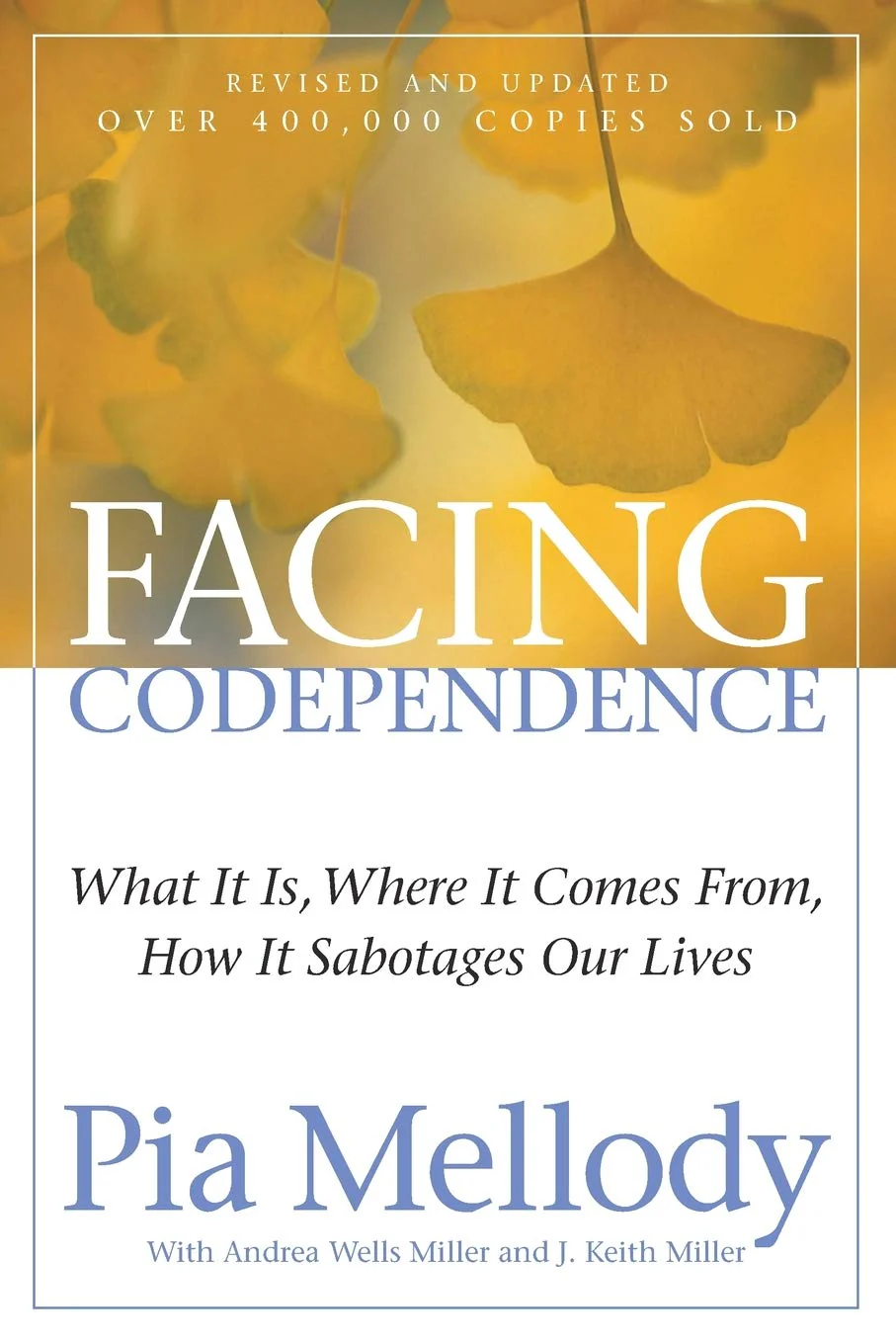
I have often questioned why so many people repeat the same painful relationship patterns. Pia Mellody’s Facing Codependence attempts to answer this question by tracing codependent behaviors back to childhood relational trauma. She has a structured approach that offers readers a way to understand and ultimately reflect on these cycles.
What was the main message or lesson of this book?
The main message of Facing Codependence is that codependency frequently originates from childhood trauma and abuse. Recovery involves identifying symptoms and healing the “inner child” through self-discovery and accountability (Mellody, Miller, & Miller, 2011). Taking accountability seems to be Pia’s main method to the path of recovery.
Pia diligently discusses five primary symptoms of codependency that manifest in codependence. These difficulties are with self-esteem, functional boundaries, owning one’s reality, meeting needs and wants, and experiencing moderation ((Mellody, Miller, & Miller, 2011). Pia states that these symptoms can manifest in extreme, self-destructive ways, such as emotional barriers and perfectionism. Some examples of each are below:
- Difficulty with Self Esteem: Individuals may set unrealistically high standards for themselves and others. Oftentimes feeling like they are never good enough.
- Difficulty with setting Functional Boundaries: Individuals being overly enmeshed in others problems.
- Difficulty Owning One’s Reality: This may involve being in constant states of denial or lying to yourself and others.
- Difficulty managing Needs and Wants: Individual may neglect one self.
- Difficulty Experiencing Moderation: This can form in either extreme emotional reactions or emotional repression (Mellody, Miller, & Miller, 2011).
Did you find it inspiring and motivating?
I believe the book is quite inspiring. I think it offers individuals a path to healing and breaking free from toxic patterns. We don’t get a choice as to what family we are born into but as adults we are able to take more control over our lives and learn about dysfunctional behaviors that continue to create unhealthy relationships with ourselves and with others.
How do I implement what I’ve learned from this book in my practice?
All of the things that Pia discusses in the book as a path to recovery are helpful practices I utilize within sessions with clients. The term self-care has become prominent in our culture. A lot of times individuals believe that this means to go get our hair and nails done or to go get a fresh cut. Although those things are helpful I believe in this book Pia discusses having a good routine and paying attention to the activities that you enjoy so that one can learn to reinforce the importance of their own needs. Some examples are below of how I implement these strategies:
Role Play Boundaries -In therapy I oftentimes will role play with clients in terms of the boundaries that they would like to set with themselves or with others. Setting boundaries can be difficult for many people because they think that it is being mean or we sometimes over function to get certain needs met of our own but in turn it creates other issues internally for ourselves. I will utilize an activity called the boundary circles. The boundary circle activity is used to visually map out personal and emotional boundaries, helping individuals define and understand their limits in relationships. It serves as a tool for self-awareness, enabling people to identify which relationships and situations are healthy and where they need to set clearer limits. Many times people believe that certain individuals in their lives have to be closer than they would like but we all can choose where people belong in our lives based off of the relationships we have with them.
Reflection on Personal History: I help clients explore their childhood experiences to understand how they contribute to codependent patterns. Many times this is not an exercise in blame, but as a significant step toward accountability and healing (Mellody, Miller, & Miller, 2011). I am a self awareness girlie and I do believe the more we understand ourselves, the more we understand how we choose to show up in this world.
Facing Codependence is a guide for anyone trying to understand how early relational wounds shape adult behavior. Pia provides a blend of clinical insight and accessible language that makes this book valuable knowledge for readers seeking clarity, validation, or a framework for healing. Whether you’re beginning your recovery journey or deepening existing work, this book offers tools worth returning to.
Mellody, P., Miller, A. W., & Miller, J. K. (1989). Facing codependence: What it is, where it comes from, how it sabotages our lives. Perennial Library.

