

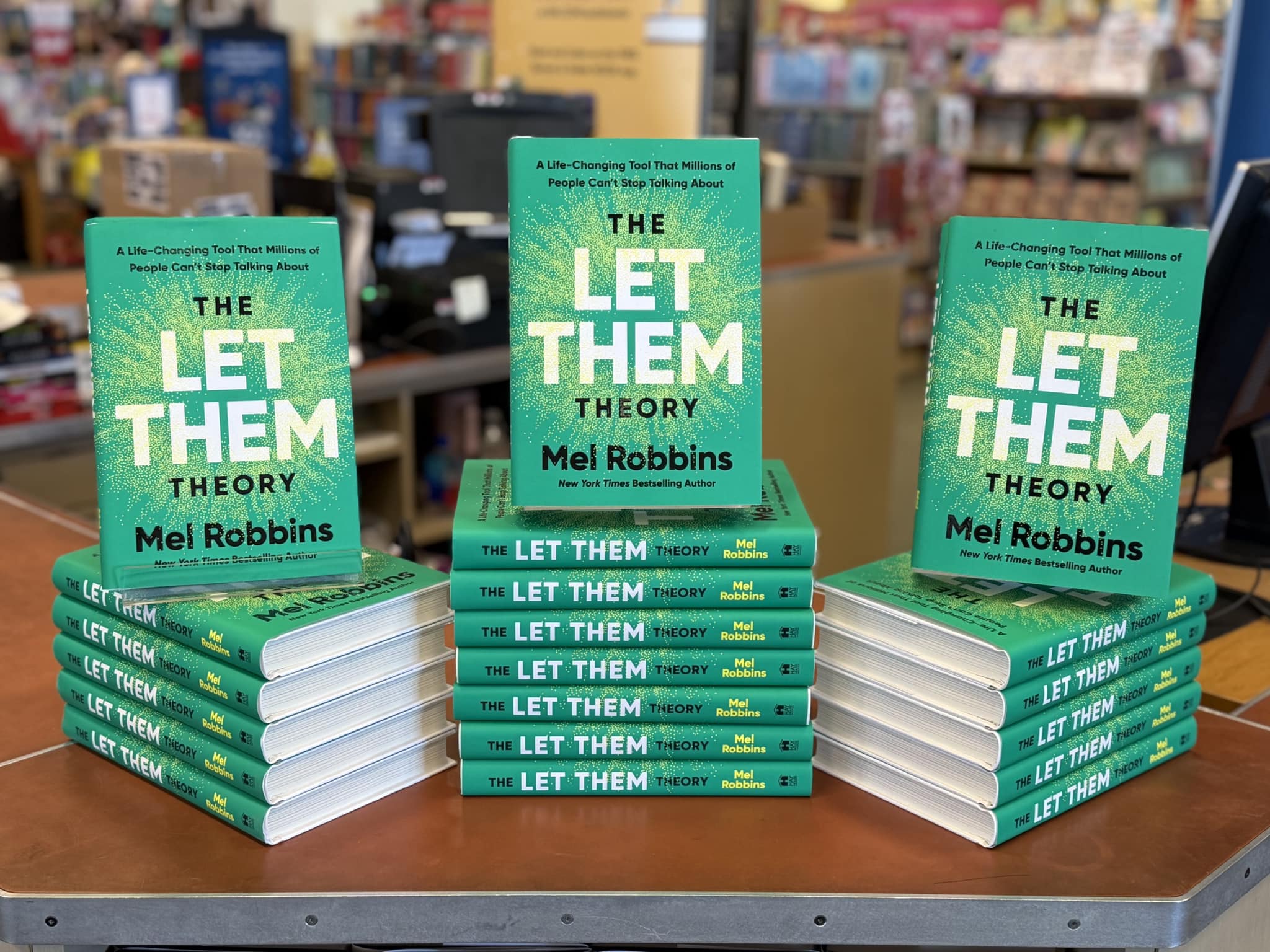
What was the main message or lesson of this book?
The Let Them Theory’s main message is to teach people how to stop wasting their time and energy on things and people that you can not control. Mel Robbins discusses The Let Them Theory being about freedom. One of the main lessons is that people can hold no power over you unless you allow them to. The Let Them Theory feels like a way to deeply challenge your way of thinking and have a better understanding that we have no control over what other people say, what they do or how they think but we do have control over how we respond, behave and think based on the information received.
Did you find it inspiring and motivating?
What I find inspiring and motivating about this book is Mel’s level of transparency. This book is written from her personal experiences with feeling the need to control everything and everyone around her. I find it inspiring for a writer to share authentically what their experience is and offer strategies in working through those hard times.

How do you implement what you learned from this book in my practice?
I will utilize any resource I possibly can to intertwine into the homework I give for better self awareness to the clients I work with. There are several chapters in this book that I have assigned for reading purposes in therapy to assist individuals in understanding that they have no control over others but most control lies within themselves. It’s such a hard concept and sometimes therapeutically I need a reference to assist in my teachings. In the Let Them Theory specifically Chapter 14: People Only Change When They Feel Like It is a chapter I assign sometimes. This chapter discusses the science of motivation and change in 3 truths:
Truth #1: Adults only change when they feel like it i.e. pushing someone to do something they don’t want makes them push back.
Truth #2: Human beings are wired to move toward what feels good i.e. people are wired to do what feels good right now and to move away from what feels hard in the moment.
Truth #3: Every single person on the planet thinks they’re the exception i.e. people believe the warning labels, threats and known risks do not apply to them. (Robbins, M. 2024).
Lesson learned is knowing that pressure doesn’t create change, it creates resistance to it. When you try to exert control over someone else’s behavior, they instinctively resist your attempt to try and control them. (Robbins, M. 2024).
What are some specific steps or strategies that you will use?
Mel does an impressive job working through several different thought strategies regarding allowing others to think negative thoughts of you, ways to deal with one’s emotional reactions or how hard it is to build friendships in adulthood.
Several insights are in this book but I’ll list (2) below I like:
FIRST Insight:
Mel discusses the habit of going first. Oftentimes I hear clients tell me their experiences with not finding friends, feeling like they don’t fit in or the struggle with feeling like they are socially awkward. Exposure techniques are also developed in therapy when someone is struggling with social anxiety but many people fear “going first.” She reviewed the below skills she did to build the habit of going first:
- Compliment people everywhere you go.
- Be curious and ask questions.
- Smile and say hello to anyone and everyone you pass or meet.
- Do this without expectation.
In therapy the complexities of social anxiety including understanding triggers and symptoms, understanding cognitive distortions and working through challenging and reframing negative thoughts are worked through but they all lead to someone leaning into building up the confidence to “go first.”
SECOND Insight:
Mel states that a lot of people get frustrated with just being told to “let them” , insinuating that they are powerless in their efforts to do anything more. She goes over The Let Them part of the Theory but also discusses the Let Me part of the theory as well. The Let Me shows you immediately what you have control over. Below is an example of how to do this:
Let Them consistently forget to invite me to outings.
Let Me choose to set better boundaries, communicate my needs and/or focus on my social life and other ways to create opportunities to connect with others who want to connect with me.
The Let Me part is what I tend to assist clients with in therapy because it can be challenging to know what your boundaries and needs are in relationships and learning ways to assert them properly to where you take more control over your own life.
Hopefully the review helps you to decide to give it a read and/or listen to the audio. The audio is an amazing addition to the book because its read by Mel Robbins and she is truly transparent, passionate and authentic in her reading!!
Robbins, M. (2024). The Let Them Theory. Hay House.

